
Home > News > Company News
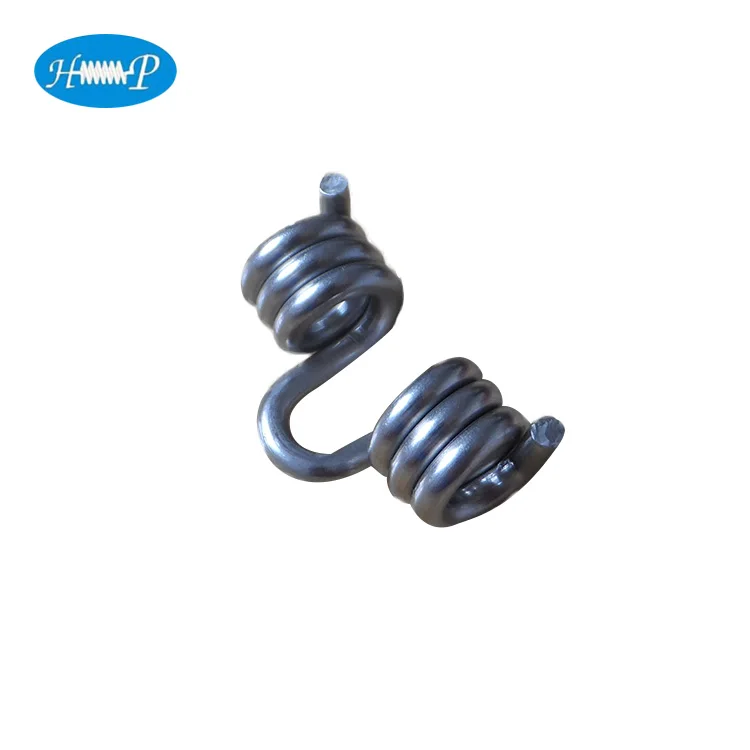
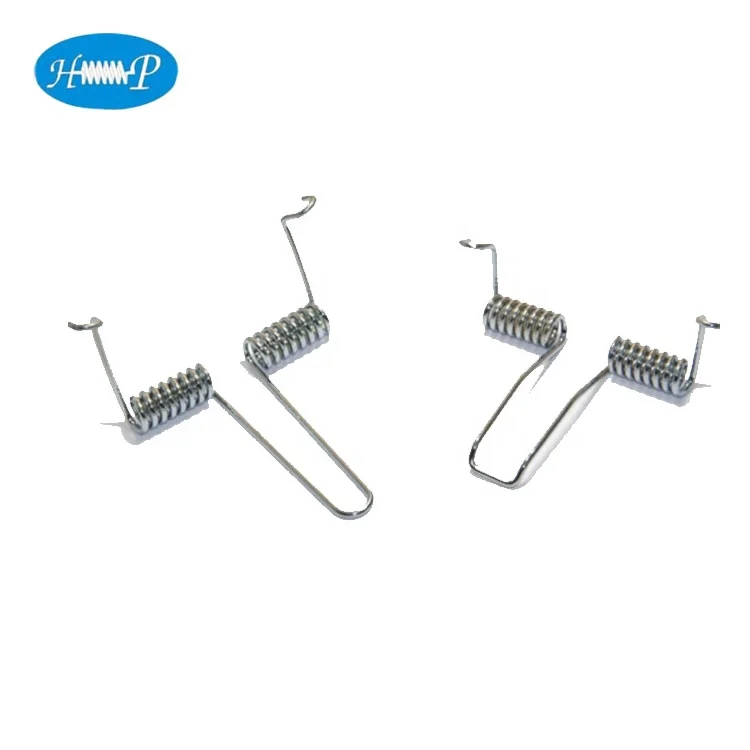
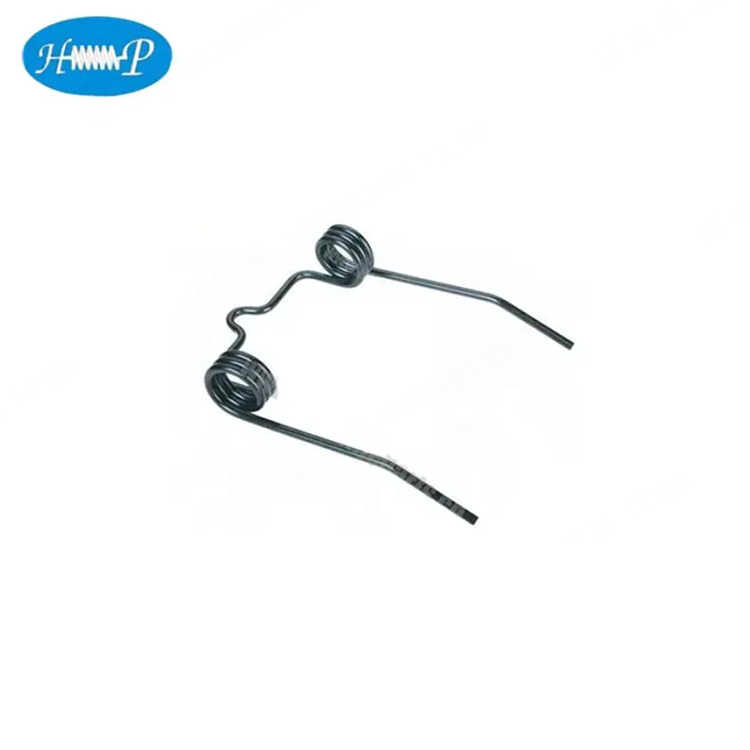
As an experienced custom metal spring manufacturer supplying components for lighting, automotive and electronics industries, HENP Spring frequently receives technical inquiries from lighting designers and project purchasers about material substitution. Many teams consider replacing metal torsion springs with low-cost ordinary plastic versions to cut component costs. However, such adjustments bring significant hidden safety risks, especially for commercial and public-use lighting fixtures with strict safety standards. Obvious performance gaps exist between metal and common plastic springs under real-world lamp operating conditions, which may result in fixture loosening, falling off and potential safety hazards.
Insufficient Spring Force Output Steel delivers a bending modulus 30-100 times higher than common injection-molded plastics. To reach the same clamping force generated by compact metal torsion springs, plastic spring components have to be enlarged several times in physical dimension. Unfortunately, internal housing space inside most lighting lamps is highly compact, leaving hardly any extra room for oversized plastic spring structures. Drawing on years of custom spring development experience, our engineering team at HENP often meets space-limited lighting projects where standard-size metal torsion springs fit perfectly while plastic alternatives cannot physically fit inside the assembly.
High Risk of Progressive Force Loss Over Time (Creep & Fatigue) Plastic materials suffer obvious aging effects under continuous mechanical preload, a phenomenon known as creep. Practical lab tests show that POM (polyoxymethylene) plastic springs can lose up to 50 % of their original spring force within only 6 weeks under sustained load. After one-year continuous service, force attenuation may reach as high as 60 %. Gradually weakened clamping force will cause recessed lamps or lamp modules to become loose over long-term operation. For lighting projects that require long-life stable clamping performance, HENP’s precision-fabricated metal torsion springs are engineered to resist creep-related force loss under normal working conditions.
Poor Heat Resistance Under Lamp Operating Temperatures LED and other light sources will continuously generate heat during daily operation, raising internal fixture ambient temperature. Such elevated working temperatures greatly accelerate the performance degradation of plastic spring parts. Independent testing demonstrates that after just one thermal cycle at 80 °C, certain ordinary plastic torsion springs can drop their retention force down to less than one-third of initial value. By comparison, properly selected metal torsion springs supplied by HENP Spring maintain stable mechanical performance under identical high-temperature cyclic environments.
Extreme Brittleness Under Sustained Mechanical Stress Popular low-cost plastics including ABS and PLA feature relatively low yield strength and limited fatigue cycle life. They are not fit for engineering scenarios with repeated twisting or long-duration constant preload. Cracks or sudden fracture may occur after cycles of thermal expansion-contraction plus mechanical torsion inside lighting fixtures. Our quality-control department at HENP has accumulated large amounts of test data on metal spring fatigue performance for lighting application scenarios.
That said, material selection is not absolutely black-and-white. Specially engineered torsion springs manufactured from high-grade engineering polymers such as POM, PTFE or PPS are feasible for certain niche industrial applications. These custom plastic spring solutions are widely adopted for medical equipment and chemical pumps, where metal corrosion resistance becomes the top priority requirement.
Nevertheless, these high-performance plastic torsion springs demand thorough structural recalculation, specialized mould development and strict sample verification. Their comprehensive production cost is considerably higher than conventional standard metal torsion springs.
For general-purpose safety-related lighting projects, well-treated steel-based torsion springs remain the more reliable and cost-effective choice. If you are looking for custom-designed metal torsion springs for lighting or other industrial equipment, feel free to contact the engineering team at HENP Spring for technical support and quotation.
 Hot News
2026-07-29
2026-06-04
2026-04-20
2026-04-11
2026-02-13
2025-04-27
We specialize in manufacturing special springs & hardware products: compression/tension/torsion springs, wire forming stamping parts and etc.
Xiang Qing RD 8# Nei, Qing Kou Tou Zi Qu, Minhou, Fuzhou, Fujian, China.
Copyright © Fuzhou Henp Spring Co., Ltd. All Rights Reserved. Privacy Policy Blog
 EN
EN